

 Contact us
 Visit CPRE.org
 Donate
Record low water levels and what is happening to rescue the Wye
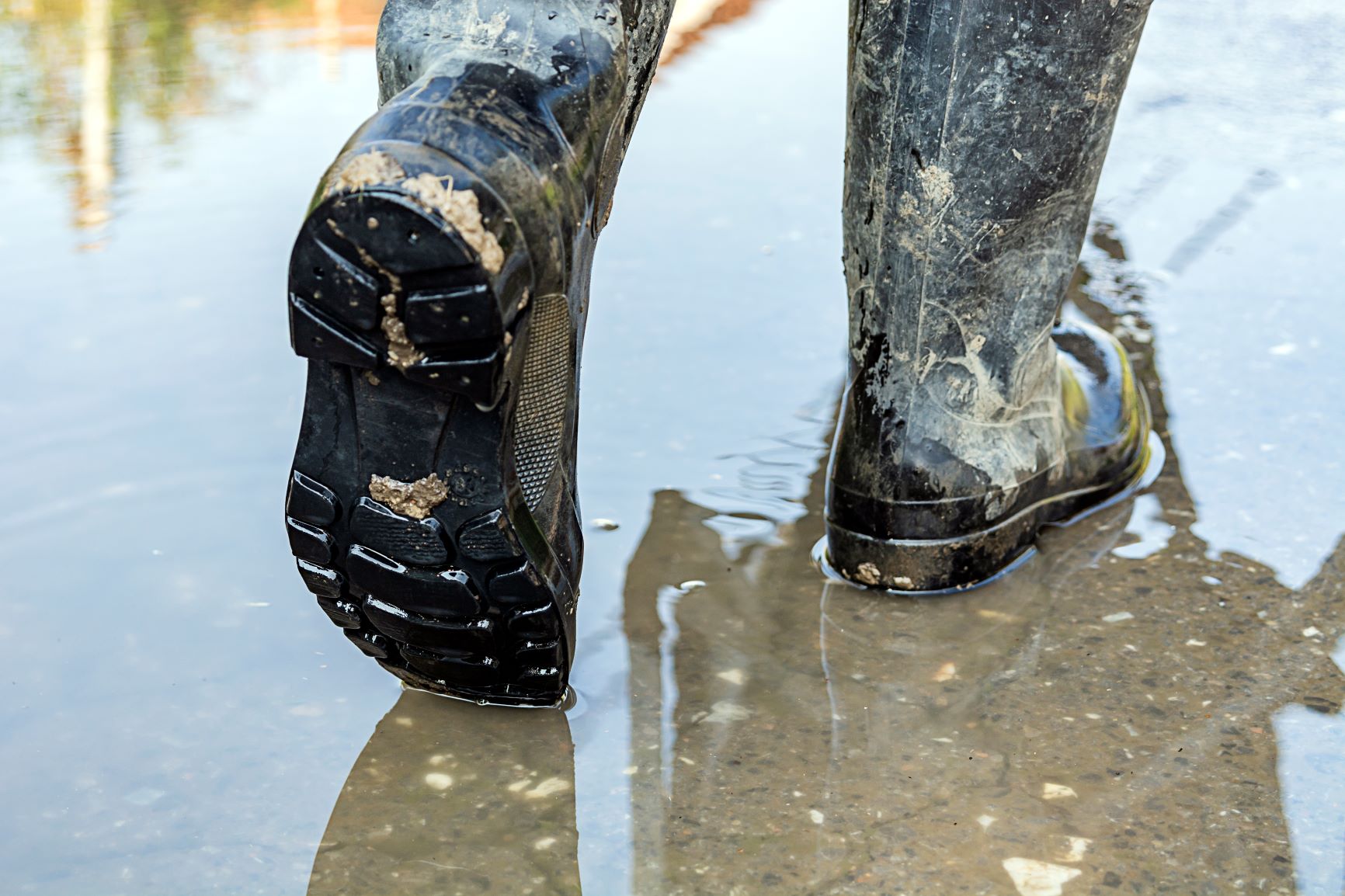
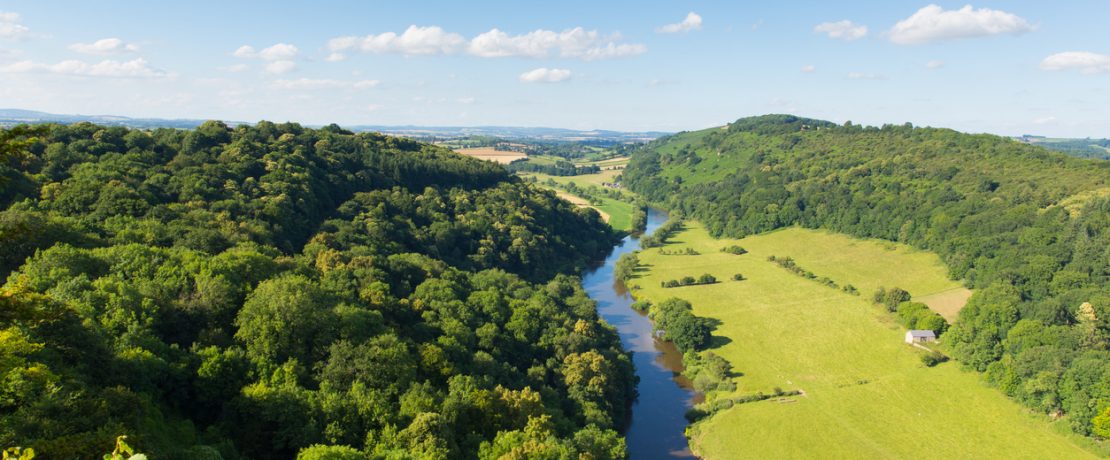
If you have walked along the Wye lately, you will already have noticed it. This is a river running lower than most of us have ever seen it.
The numbers behind the drought
It is worth pausing on how quickly this has moved. On 24 July, Bredwardine measured 0.11 metres against a typical low of 0.27 metres. Belmont measured 0.12 metres against a typical low of 0.17 metres. Just over a fortnight later, on 11 August, both had fallen further still, to 0.09 metres and 0.10 metres. Downstream at the Old Wye Bridge gauge in Hereford, the reading is 0 metres.
Natural Resources Wales has moved the Wye catchment from “normal” to “prolonged dry weather” status. It has since declared full drought in several Welsh catchments nearby. The Wye is a regulated river. This means the Elan Valley reservoirs can top it up when flows get this low. Natural Resources Wales last reported the dams at 68% capacity. It says it is watching conditions closely. It had not confirmed a support release into the Wye as of the latest update.
What the Environment Agency’s 2025 data shows
The Environment Agency (EA) has just published its River Wye Data Analysis Report for 2025. It fills in a lot of the picture. Average water temperatures went above 20°C at every monitored Wye site in July, with peaks over 25°C during the summer, putting 2025 much closer to the hot, dry summer of 2022 than the milder 2024. The good news buried in there: despite the heat, we did not see the prolonged algal blooms you might expect, likely thanks to less nutrient runoff in spring and the absence of big summer storms. Though the Agency’s own research now points to water temperature, more than nutrient pollution, as the bigger driver of algal blooms in the Wye. No waterbodies have improved in ammonia status (read about ammonia in the air here).
On water quality, there is a genuine bright spot: phosphate levels in the main River Wye in England are now meeting Special Area of Conservation targets, though the River Lugg still has work to do and is exceeding all phosphate targets currently.
Catchment plans and reports: where things stand
Behind the day-to-day figures, several bigger pieces of work are moving, slowly. The EA published its Diffuse Water Pollution Plan this year, ordered by a judge following legal action from Fish Legal. CPRE Herefordshire felt it fell short on real proposals and actions, and said so to the EA. Fish Legal may yet challenge the plan or push for stronger commitments, and calls from MPs and others for a Water Protection Zone could resurface if nutrient pollution does not fall.
The Welsh Government and Defra fund the Wye Catchment Plan. The nominated consultants are Haskoning who are close to completing stage one of data collection. The complexity has pushed back the completion date when Haskoning will present all the option appraisals. This now looks like it will be at the end of this year.
Natural England has also published its condition report on the Lugg catchment. It suggests the Lugg catchment needs systems change if we want to return it to favourable health. Whilst the report highlights the issues and the challenges many of which fall on agriculture it does not provide action points or timelines. This is one of the very frustrating points of this type of report. It is good to identify problems, but this has happened consistently for decades and voluntary actions have made no impact in stopping pollution and improving the environment. We urgently need a body to take charge and take the necessary actions within an agreed time-frame. Wouldn’t it be great if we knew who accepts accountability and responsibility to return the catchment to favourable health? Farmers need incentives to take the required action, and regulators should have more powers to make polluters pay.
Find out more about our River Wye Citizen Science Project
FAQ
Why is the River Wye so low right now?
Herefordshire is in a prolonged dry spell that has pushed river levels at gauges including Bredwardine and Belmont well below their typical summer lows, while low rainfall has also led Natural Resources Wales to declare drought conditions in nearby Welsh catchments.
Is low water bad for wildlife in the Wye?
Low, warm water holds less dissolved oxygen, which puts additional stress on fish and other river life, and the Environment Agency’s 2025 report also links warmer summer water temperatures to a greater risk of algal blooms.
What is being done about pollution in the Wye catchment?
Three pieces of work are underway: the Environment Agency’s Diffuse Water Pollution Plan, the Welsh Government and Defra-funded Wye Catchment Plan, and Natural England’s condition report on the Lugg. Campaigners, including CPRE Herefordshire, say all three still lack firm action points, accountability and timelines.