

 Contact us
 Visit CPRE.org
 Donate
Is Herefordshire’s air as clean as it looks?
Research shows Herefordshire is one of the most polluted places in England when it comes to ammonia emissions, and the source is almost entirely agricultural. Here is what the data shows, and why it matters.
What the ammonia map reveals about Herefordshire
In April 2026, Compassion in World Farming (CiWF) and Sustain published an interactive Ammonia Map, the first of its kind to show the scale of ammonia emissions from intensive farming across the UK. The findings for Herefordshire are stark.
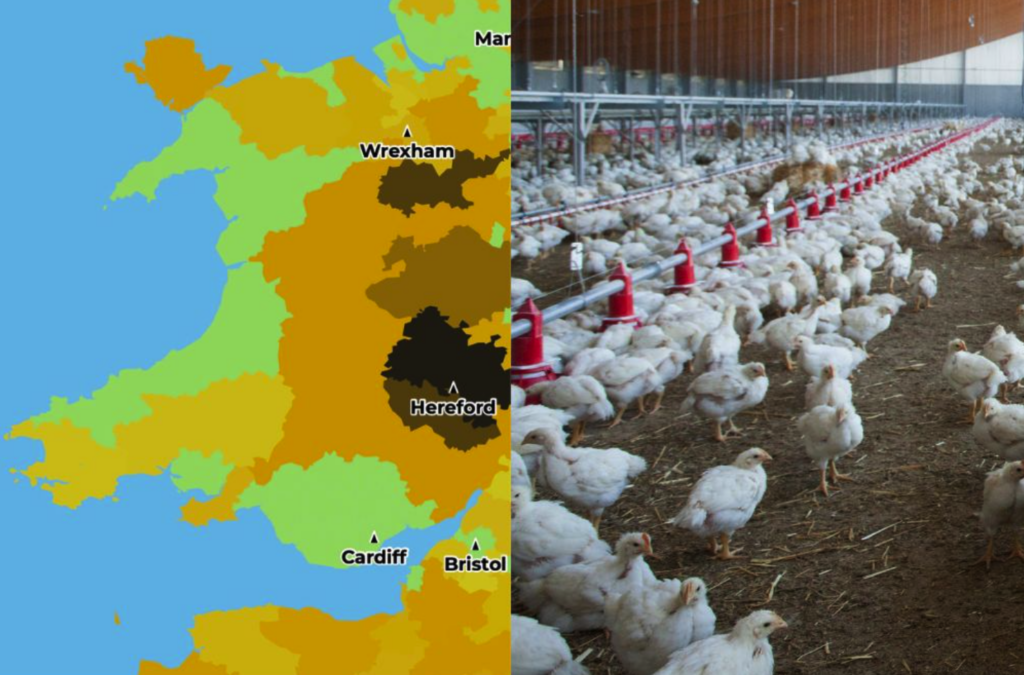
Factory farming in North Herefordshire produces up to 2,992 tonnes of ammonia every year, with 305 tonnes released directly from farms and 2,687 tonnes emitted when manure is spread on fields. In Hereford and South Herefordshire, intensive farming produces a further 1,965 tonnes annually. Herefordshire sits alongside Lincolnshire and Norfolk as one of just three areas in England with the most severe concentrations of ammonia emissions, a distinction tied directly to the density of intensive poultry and pig farming across these counties.
UK agriculture is responsible for 89 per cent of all national ammonia emissions, according to the CiWF report The Ammonia Pollution Problem. As factory farming has intensified, so has the scale of the harm. The number of poultry farms in the River Wye catchment has doubled in the past 15 years.
Why ammonia matters for human health
Once released into the air, ammonia reacts with other pollutants to form fine particulate matter, known as PM2.5, one of the most dangerous forms of air pollution. These microscopic particles penetrate deep into the lungs and bloodstream and have been linked to heart disease, strokes, lung cancer, and asthma. Long-term exposure is increasingly associated with type 2 diabetes and dementia.
Nationally, agriculture contributes up to 39 per cent of urban particulate pollution, underscoring the direct link between farming practices and public health in towns and cities far from the fields themselves.
One resident living near a large poultry operation in Lincolnshire told CiWF: “When the chicken sheds are cleaned out, the smell and the polluted air hits me straight away – my chest tightens, my eyes sting, and I have to shut every window in my house just to cope. I’m asthmatic, and for days I can’t even step into my own garden. This isn’t just a countryside smell – it’s a serious health risk, and it’s getting worse.”
The environmental toll
Excess nitrogen from ammonia deposition acidifies soils, fuels algal blooms, and degrades ancient woodlands, grasslands, wetlands, and freshwater habitats. Between 70-80% of broadleaved woodland habitat across the UK already exceeds critical ammonia levels, according to Herefordshire Council’s own agricultural planning guidance.
The River Wye is among the water courses directly affected. Ammonia and associated nutrient run-off from intensive farming is a primary driver of the river’s declining ecological health, with its official condition downgraded by Natural England to unfavourable-declining, its worst rating.
Air quality in Herefordshire
Ammonia is the dominant issue, but it is not the only one. Herefordshire Council’s Air Quality Annual Status Report 2024 identifies two Air Quality Management Areas in the county, both on busy road junctions in Hereford and Leominster, where pollution from road traffic exceeds national objectives. Pesticide spray drift from agricultural operations, dust from large-scale farming, and bonfire smoke all contribute to rural air quality problems.
What CPRE Herefordshire is doing about it
CPRE Herefordshire scrutinises planning applications for intensive poultry units and other large-scale agricultural developments, pushing for proper assessment of ammonia impacts before permissions are granted. Our River Wye citizen science project puts more than 500 volunteers in the field to monitor water quality across the catchment, building an evidence base that planners and decision-makers cannot ignore.
As Anthony Field, Head of CiWF’s UK office, put it: “Factory farming sits at the heart of the UK’s ammonia crisis. If we are serious about protecting public health and restoring the natural world, we must confront the role of industrial livestock production and rethink how we produce food.”
Frequently asked questions
Is Herefordshire’s air quality good?
For most residents, day-to-day air quality in Herefordshire is reasonable. However, the county has some of the highest ammonia emissions in England due to intensive livestock farming, and has two designated Air Quality Management Areas in Hereford and Leominster where road traffic pollution exceeds national standards.
What is causing ammonia pollution in Herefordshire?
The primary source is intensive livestock farming, particularly poultry units. Ammonia is released both directly from farm buildings and from the spreading of manure on fields. North Herefordshire alone produces up to 2,992 tonnes of ammonia per year from intensive farming, making it one of the worst-affected areas in the UK.
What can I do?
You can respond to planning consultations for new agricultural developments in your area, support CPRE Herefordshire’s campaigns, or join our River Wye citizen science monitoring programme
Sources:
Compassion in World Farming and Sustain, The Ammonia Pollution Problem and interactive Ammonia Map (April 2026), via Nation.Cymru: nation.cymru
Herefordshire Council, Air Quality Annual Status Report 2024: herefordshire.gov.uk
Herefordshire Council, Agricultural Planning Supplementary Planning Document: herefordshire.gov.uk
The Bureau of Investigative Journalism, Air pollution surging across poultry megafarming hotspots (April 2024): thebureauinvestigates.com