

 Contact us
 Visit CPRE.org
 Donate
Herefordshire’s Hedgerows

Protecting Herefordshire’s hedgerows.
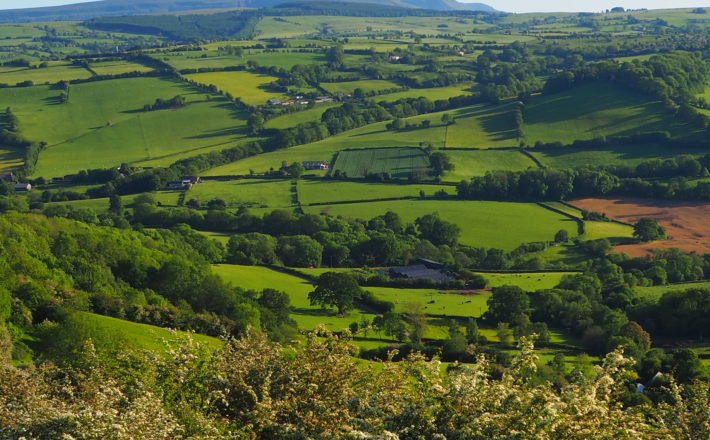
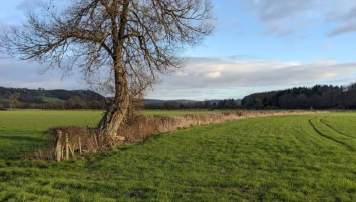
Hedgerows are one of the defining features of Herefordshire’s countryside. They provide homes for wildlife, protect our rivers and soils, store carbon and shape the patchwork of fields that makes the county so beautiful. We believe they should be protected and restored for future generations to enjoy.
Why hedgerows matter
- Wildlife. Hedgerows are a vital habitat for many farmland and woodland birds, mammals and insects, some of which are protected species. Trees growing along hedgerows provide even more habitat, and hedges act as wildlife corridors linking woods and other habitats.
- Rivers and soils. Hedgerows act as barriers that help stop fertilisers, pesticides and soil from washing off fields into watercourses. This is especially important in the River Wye catchment. They also slow the flow of rainwater across the land.
- Farming. Well-managed hedgerows provide shelter and boundaries for livestock.
- Towns. In built-up areas, hedges help with drainage, can reduce the effects of air pollution, provide a home for urban wildlife and make streets more attractive.
- Climate. Hedgerows store carbon in their wood, roots and the soil beneath them. The independent Climate Change Committee has recommended increasing the length of hedgerows by 40% to help tackle climate change, a call CPRE has campaigned for (CPRE, 2023).
The government’s Environmental Improvement Plan now commits to creating or restoring 48,000 km (about 30,000 miles) of hedgerows in England by 2037, and 72,500 km (about 45,000 miles) by 2050 (CPRE, December 2025).
Hedgerow Heroes
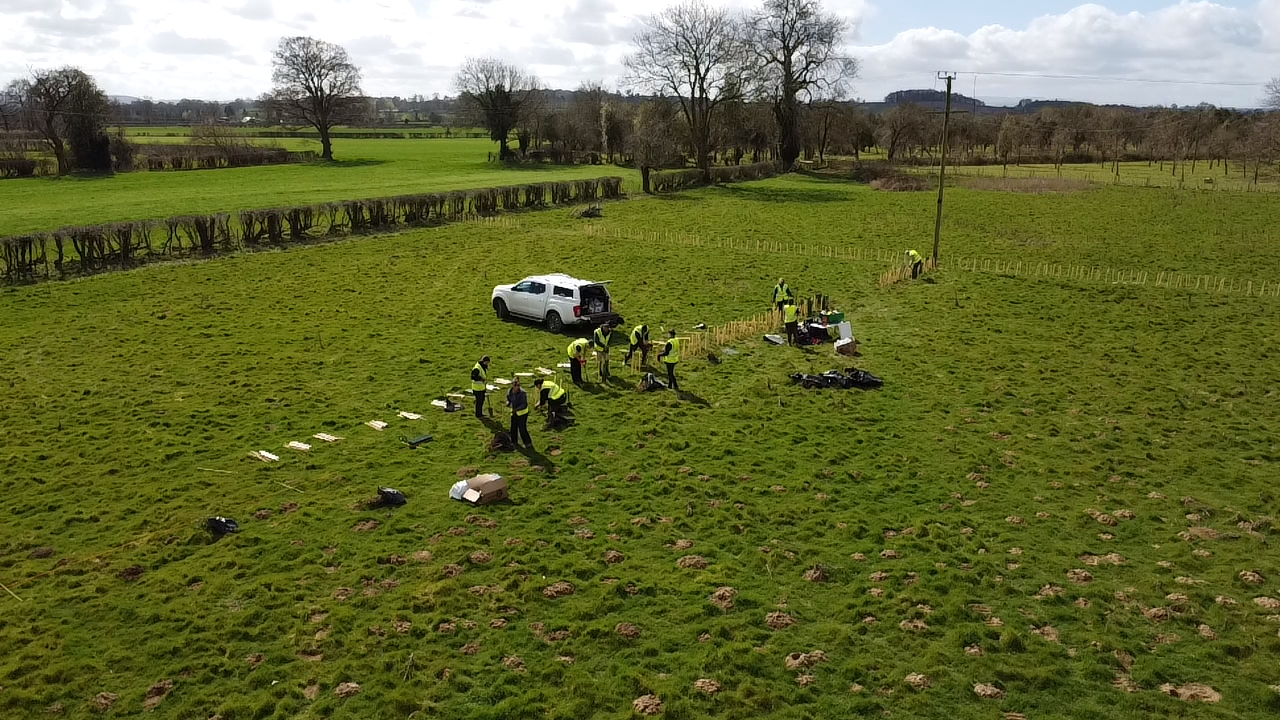
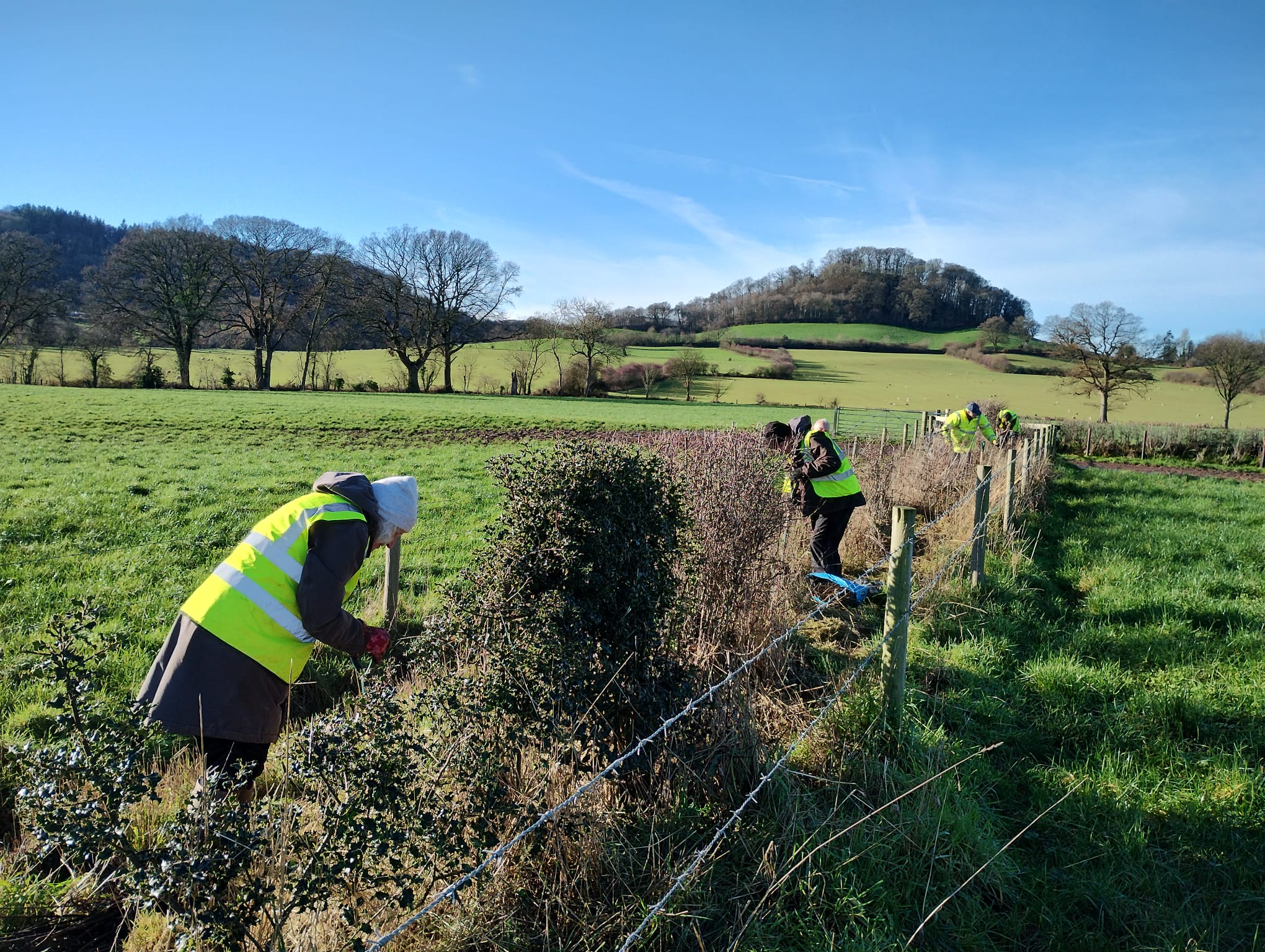
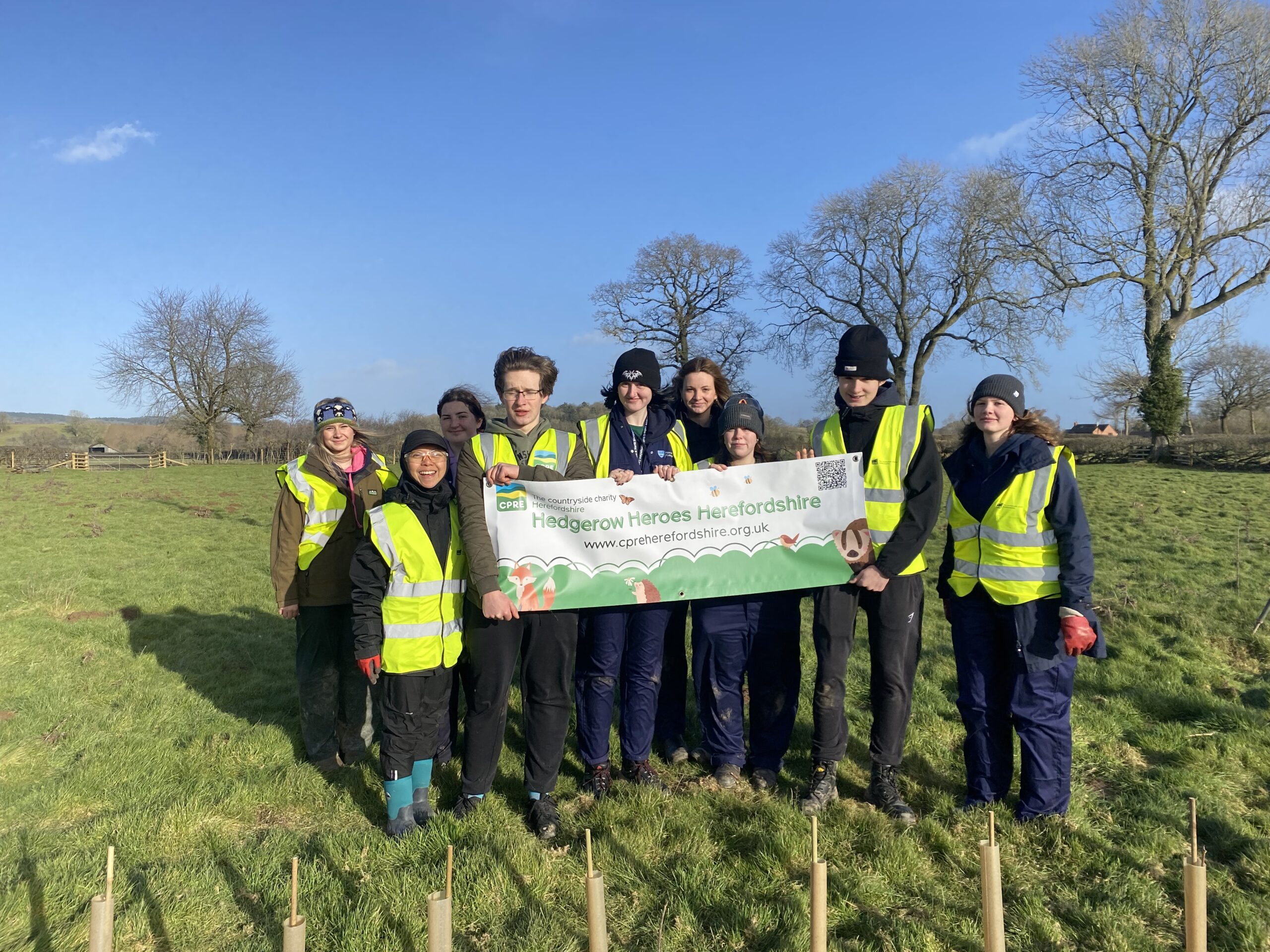
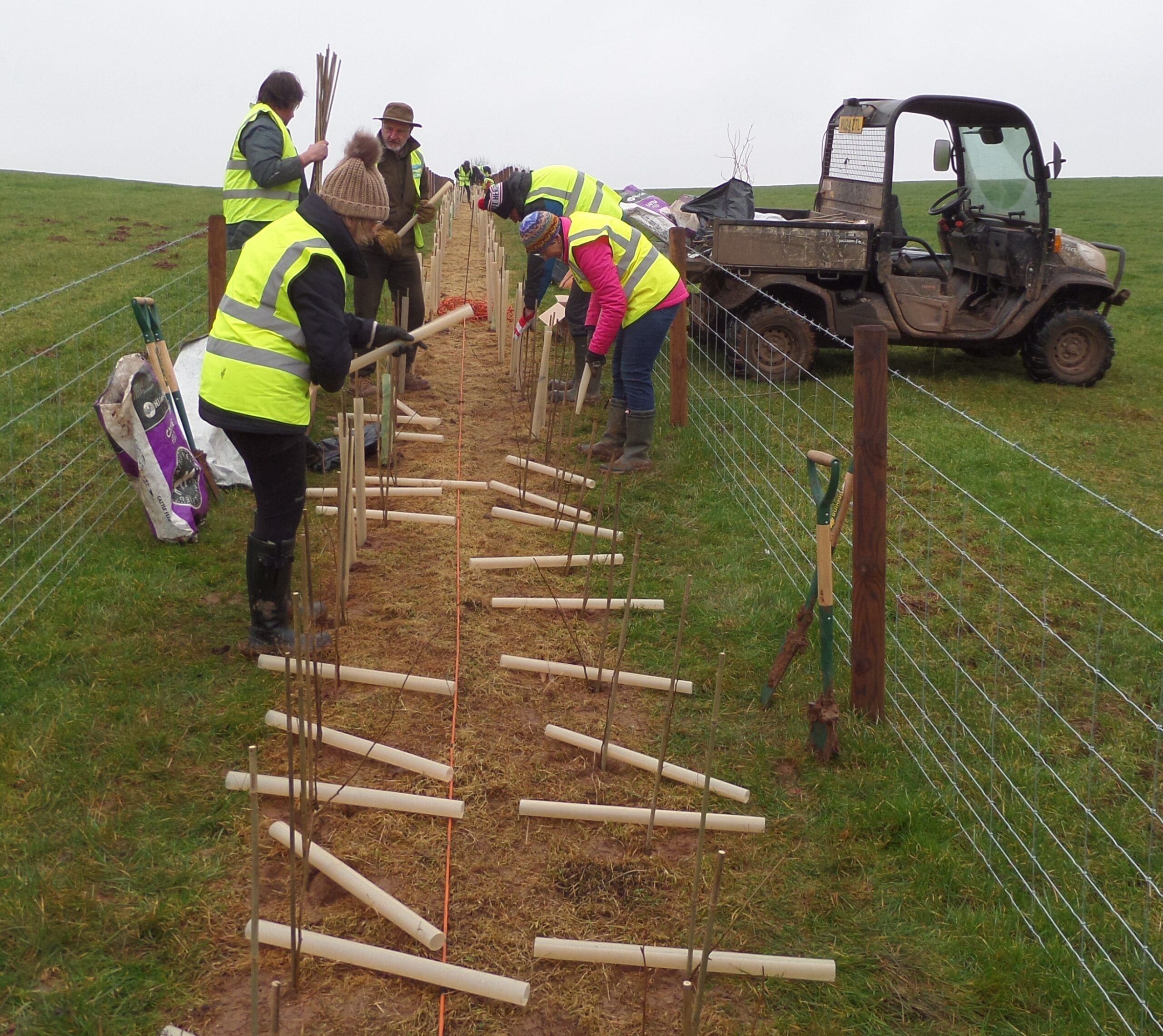
Through our Hedgerow Heroes project, CPRE Herefordshire volunteers plant and restore hedgerows across the county. Hedgerow Heroes is part of a national CPRE project. Since 2021, almost 4,000 volunteers across England have planted or restored 99.8 miles of hedgerow (CPRE, May 2026).
Hedgerows in Herefordshire
Herefordshire’s varied landscapes mean the county is rich in different types of hedgerow, often with large trees growing along them, and most of its hedges are old. In the 18th and 19th centuries, Parliamentary Enclosure Acts turned about 18% of England’s land from open fields into hedged enclosures, and more than half of some Midland counties, such as Oxfordshire and Northamptonshire (Turner). In Herefordshire the effect was small, because most of the county’s countryside was already enclosed by the 18th century, and probably long before (Herefordshire Through Time).
Surprisingly little information has been recorded about Herefordshire’s hedgerows, which is why we believe it’s important to keep good records and identify valuable hedges before they are lost. We love our county’s hedges so much that we’ve produced a booklet to celebrate them: Hedgerows and Verges in Herefordshire.
Because hedgerows are living ecosystems, they need to be managed and maintained to stay in good condition. We’re pleased that Herefordshire Council protects many hedges under the Hedgerows Regulations, but we’re concerned that hedges are still being lost to development, and there is evidence that some are removed unlawfully.
Good and bad news
Our planning volunteers use their experience to spot valuable hedgerows in planning applications. In 2022 we commented in defence of a 400m hedge near Leintwardine, and the council issued a Hedgerow Retention Notice to protect it permanently.
Sadly, we have also seen disappointments. In one case, a hedge could legally be removed because the council did not respond to the removal notice within the 42 days allowed. We were also dismayed by the needless loss of another protected hedgerow at Sellack.
How hedgerows are protected
The Hedgerows Regulations 1997
The Hedgerows Regulations 1997 protect important countryside hedgerows in England. Anyone wanting to remove a protected hedgerow must first send a hedgerow removal notice to the local planning authority, which then has 42 days to decide whether the hedge must be kept. Removing a protected hedgerow without permission can lead to an unlimited fine (GOV.UK).
To find out whether a hedgerow is protected, there are three questions to ask.
- Is it a countryside hedgerow?
It must be a line of shrubs, which can include trees, that is:
- more than 20m long, with any gaps of 20m or less, or
- less than 20m long but joined to another hedge at each end.
- Is it in a protected location?
It must be on or next to:
- agricultural or forestry land, or land used for keeping horses, ponies or donkeys
- common land or a village green
- a Site of Special Scientific Interest, a protected European site, or a local or national nature reserve
Hedges in or around private gardens are not protected.
- Is it an “important” hedgerow?
It must be at least 30 years old and meet at least one of these criteria:
- it marks all or part of a parish boundary that existed before 1850
- it contains a recorded archaeological feature, or is wholly or partly on or next to an archaeological site
- it marks the boundary of an estate or manor that existed before 1600
- it is part of a field system, or is linked to features of a field system, that existed before 1845
- it contains protected species of animals, birds or plants
- it contains species recorded as vulnerable, endangered or rare
- it contains a certain number of woody species, such as hawthorn, hazel and field maple, as set out in Schedule 1, Part II of the regulations
Old maps, local records and modern Ordnance Survey maps can all help show how old a hedge is. Herefordshire’s Core Strategy policies LD2 (biodiversity and geodiversity) and LD3 (green infrastructure) also support the protection of hedgerows in planning decisions.
Hedge management rules
Since May 2024, the Management of Hedgerows (England) Regulations 2024 also apply to hedges on farmland. Hedges must not be cut or trimmed between 1 March and 31 August, to protect nesting birds, and a 2-metre buffer strip must be left next to them, free from cultivation, fertilisers and pesticides. The Rural Payments Agency enforces these rules.
How to report a problem
- Removal of a protected hedgerow: report it to Herefordshire Council.
- Damage to nesting birds: contact the police and ask for a wildlife crime officer.
- Hedge cutting in the nesting season, or breaches of the buffer strip rules on farmland: report them to the Rural Payments Agency.
Help us protect Herefordshire’s hedgerows
If you’d like to help us keep watch over protected hedgerows, or join one of our hedge planting days, visit our project page below.