

 Contact us
 Visit CPRE.org
 Donate
From Elgar to Queenswood: The early story of CPRE Herefordshire
CPRE Herefordshire has been working to protect and enhance the county’s countryside for over 90 years. Founded in the early 1930s, the organisation was part of a growing national movement determined to safeguard England’s landscapes for future generations.
The national charity, originally called the Council for the Preservation of Rural England, was established in 1926 by planner Sir Patrick Abercrombie and others who were deeply concerned about threats to the countryside. At the time, rapid road building and housing expansion were beginning to spread development along rural roads — a pattern known as “ribbon development.” CPRE was formed to challenge this and promote thoughtful planning that respected landscapes and rural communities. This year CPRE celebrates it’s centenary!
Like many counties, Herefordshire quickly developed its own local CPRE branch. Since 1931, CPRE Herefordshire has championed the county’s landscapes and communities, working with local people to ensure the countryside remains a special place to live, work and enjoy.
Sir Edward Elgar
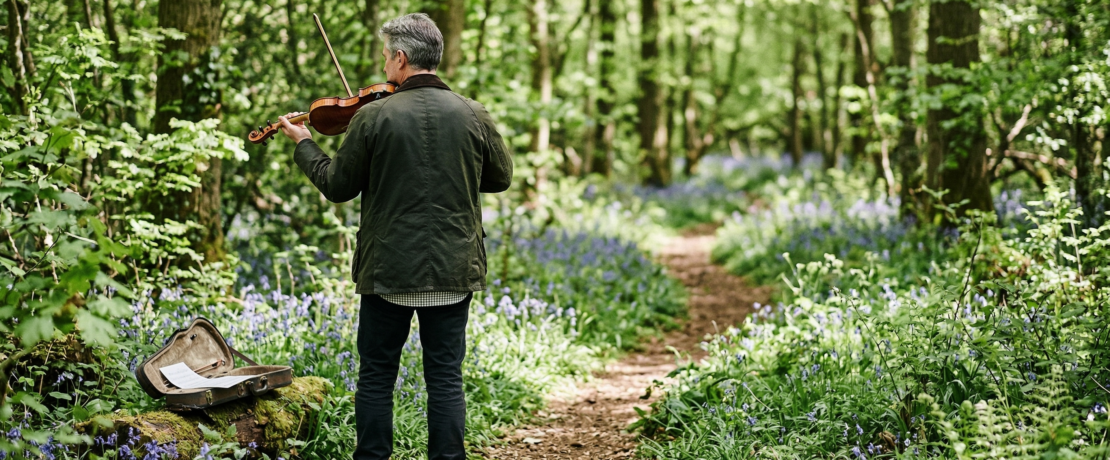
One fascinating historical connection is with the celebrated English composer Sir Edward Elgar, who lived nearby in Worcestershire and had strong ties to the region. It is believed that Elgar served as a Vice-President of CPRE Herefordshire between 1931 and 1934, reflecting the organisation’s early links with influential figures who shared a passion for protecting the countryside.
Creating Queenswood
CPRE Herefordshire’s most remarkable early achievement came in 1934, when land on Dinmore Hill was put up for sale.
Local campaigners feared that the area could be lost to ribbon development, which would have dramatically altered the landscape. Determined to protect this beautiful stretch of countryside, CPRE supporters launched a public appeal to raise funds to purchase the land.
They succeeded.
Thanks to generous donations, in January 1934, 137 acres were bought for £1,092, a significant sum at the time. The aim was simple but ambitious: to preserve the whole of Dinmore Hill as a public place for everyone to enjoy.
Soon afterwards, plans emerged to create a country park to mark King George V’s Silver Jubilee. In 1935 CPRE formally handed the land over to form part of what was then called Kingswood Country Park, later renamed Queenswood.
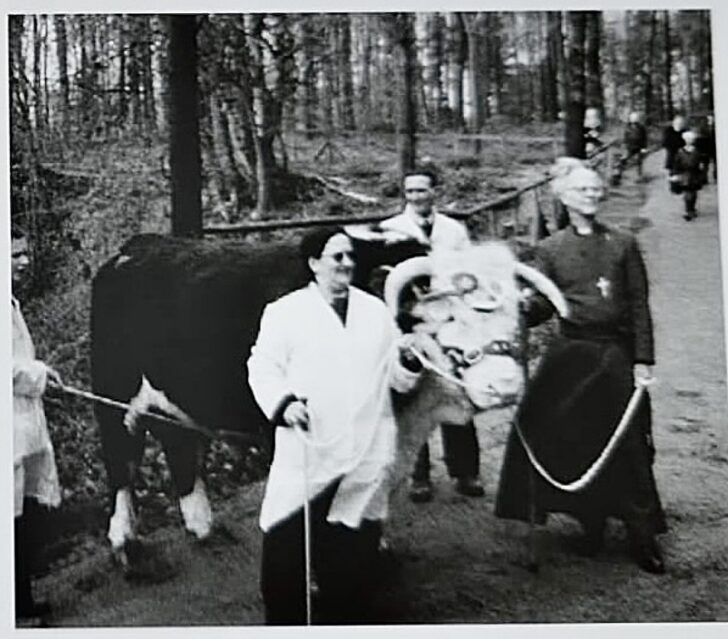
Queenswood has played a significant role in the county’s history over the years. One memorable moment is captured in the photograph above, showing the Bishop of Hereford, John Oliver, ceremonially walking a Hereford bull to the viewpoint at Queenswood. The unusual event marked the administrative “divorce” of Herefordshire and Worcestershire and the creation of the new Herefordshire Unitary Authority.
Today, Queenswood Country Park and Arboretum remains one of Herefordshire’s most loved natural spaces. Managed by Herefordshire Wildlife Trust today, it contains ancient woodland, a nationally important arboretum and thriving wildlife habitats, welcoming thousands of visitors every year.
A Legacy That Continues Today
The story of Queenswood captures the spirit that still drives CPRE Herefordshire today: local people working together to protect the landscapes they love.
While the challenges facing the countryside have evolved, the core mission remains the same: to promote, enhance and protect a thriving countryside for everyone’s benefit.
From protecting landscapes through planning responses to planting hedgerows, monitoring the health of the River Wye, and improving dark skies, CPRE Herefordshire continues the work begun by those early pioneers.
More than ninety years later, the organisation remains rooted in the same belief that inspired its founders — that the Herefordshire countryside is something truly special, and worth protecting for generations to come.
References:
- CPRE national history (CPRE)
- CPRE Herefordshire history of Queenswood (CPRE Herefordshire
- Queenswood Country Park information (Herefordshire Lore)